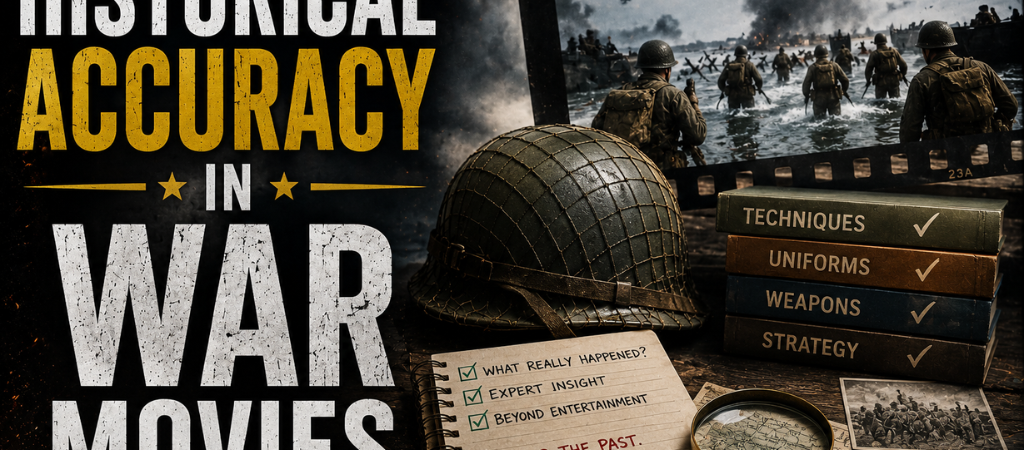
War movies have been one of the most popular film genres for decades. They bring history to life by showing important battles, military strategies, and the experiences of soldiers during times of conflict. Many people watch war films not only for entertainment but also to learn about historical events.
However, a common question among movie lovers is: How historically accurate are war movies?
Some films carefully recreate real events using historical records, military experts, and authentic equipment. Others change facts, timelines, and characters to make the story more exciting for audiences. This balance between history and entertainment often creates debates among viewers, historians, and filmmakers.
In this article, we will explore historical accuracy in war movies, why it matters, how filmmakers approach real events, and examples of films that succeeded or struggled in presenting history accurately.
What Is Historical Accuracy In War Movies?
Historical accuracy refers to how closely a movie follows actual historical events, people, locations, military tactics, and equipment.
A historically accurate war movie tries to present:
- Real battles and military campaigns
- Authentic uniforms and weapons
- Correct timelines
- Accurate locations
- Genuine military procedures
- Real-life historical figures
No film can recreate history perfectly. Movies are designed to tell stories, and storytelling often requires simplification. However, some films make a stronger effort to remain faithful to historical facts than others.
Why Historical Accuracy Matters
Many viewers learn about historical events through movies. For some people, a war film may be their first introduction to a major conflict.
Historical accuracy matters for several reasons.
Preserving History
Movies help keep important historical events alive for future generations. Accurate films can increase public interest in history and encourage further learning.
Respecting Real People
Many war movies are based on real soldiers, commanders, and civilians. Accurate portrayals show respect for those who experienced these events.
Educating Audiences
Well-researched films can teach viewers about military conflicts, political situations, and historical consequences.
Preventing Misunderstandings
When movies significantly change historical facts, audiences may develop incorrect ideas about what actually happened.
Why Filmmakers Change Historical Facts
Even movies based on true stories often include fictional elements.
There are several reasons for this.
| Reason | Explanation |
| Storytelling | Real events can be complex and difficult to explain in a short movie |
| Entertainment | Audiences often expect action, drama, and emotional moments |
| Time Limits | Wars may last years, but movies usually last only a few hours |
| Character Focus | Several real people may be combined into one fictional character |
| Budget Constraints | Some historical scenes are expensive to recreate |
These changes are usually made to create a smoother and more engaging viewing experience.
Elements That Make A War Movie Historically Accurate
Not all aspects of a war movie have the same level of importance. Several factors help determine how accurate a film feels.
Authentic Uniforms
Military uniforms vary by country, rank, and time period. Accurate costumes help viewers feel immersed in the historical setting.
Correct Weapons And Vehicles
Weapons, tanks, aircraft, and military vehicles should match the era being portrayed.
Realistic Military Tactics
Combat scenes become more believable when soldiers use tactics that reflect actual military practices.
Historical Locations
Many filmmakers either shoot at real locations or carefully recreate them.
Expert Consultation
Military historians, veterans, and researchers often help filmmakers avoid historical mistakes.
Common Areas Where War Movies Take Creative Liberties
Although many war films strive for realism, certain areas are often altered.
Simplified Timelines
Historical events that occurred over months may be shown as happening within days.
Fictional Characters
A fictional character may represent the experiences of several real individuals.
Dramatic Dialogue
Actual conversations from history are often unknown, so screenwriters create dialogue.
Enhanced Action Scenes
Movies sometimes exaggerate explosions, battles, and heroics to increase excitement.
Simplified Politics
Complex political situations are often reduced to make the story easier to understand.
War Movies Known For Historical Accuracy
Several war films have earned praise for their commitment to realism.
Saving Private Ryan
This World War II film is famous for its realistic depiction of combat.
Why viewers praise its accuracy:
- Realistic battle sequences
- Authentic military equipment
- Accurate uniforms
- Genuine soldier experiences
Many veterans have commented on the realism of its battlefield scenes.
Black Hawk Down
Based on events in Somalia, this film recreates a military operation that took place in the early 1990s.
Strengths include:
- Accurate military tactics
- Realistic urban combat
- Detailed equipment
- Strong attention to historical detail
Downfall
This film portrays the final days of Nazi Germany during World War II.
It is praised for:
- Historical research
- Authentic settings
- Realistic performances
- Detailed recreation of events
Letters From Iwo Jima
This movie tells the story of the Battle of Iwo Jima from the Japanese perspective.
The film stands out because it:
- Shows multiple viewpoints
- Uses extensive historical research
- Focuses on human experiences
- Maintains cultural authenticity
1917
Although centered around a fictional mission, the film accurately recreates World War I conditions.
Accurate elements include:
- Trench systems
- Battlefield environments
- Military equipment
- Soldier routines
War Movies Criticized For Historical Inaccuracies
Some popular films have faced criticism for changing important historical facts.
Pearl Harbor
This movie combines romance with historical events.
Common criticisms include:
- Altered timelines
- Fictional storylines
- Exaggerated action sequences
- Oversimplified historical details
U-571
This submarine film has been criticized for changing the nationality of soldiers involved in a key historical mission.
Issues include:
- Historical events reassigned to different forces
- Altered facts
- Fictionalized military actions
The Patriot
Although entertaining, the film contains several historical inaccuracies.
Historians often point to:
- Fictional military actions
- Simplified political context
- Altered historical events
Enemy At The Gates
Some scenes in this film have been questioned by historians due to limited evidence supporting the events portrayed.
Comparing Accurate And Inaccurate War Movies
The table below highlights some differences.
| Feature | More Accurate Films | Less Accurate Films |
| Uniforms | Closely match historical records | May contain errors |
| Weapons | Historically correct | Sometimes modified |
| Timelines | Follow actual events | Often compressed |
| Characters | Based on real people | Frequently fictionalized |
| Military Tactics | Reflect real strategy | Designed for drama |
| Historical Events | Closely recreated | Often changed |
Challenges Of Making Historically Accurate War Movies
Creating an accurate war movie is much harder than many people realize.
Limited Historical Records
Not every battle was fully documented. Historians often work with incomplete information.
Conflicting Accounts
Different witnesses may remember events differently.
Budget Limitations
Recreating large battles requires significant resources.
Audience Expectations
Modern viewers often expect fast-paced action and emotional storytelling.
Technical Difficulties
Finding authentic vehicles, weapons, and locations can be challenging.
The Role Of Historians In Film Production
Many modern filmmakers work closely with historians.
Historians may help with:
- Script reviews
- Timeline verification
- Uniform research
- Military strategy consultation
- Fact-checking
Their involvement often improves a film’s authenticity.
Example
If a movie is set during World War II, historians may review:
- Soldier uniforms
- Military ranks
- Weapons used
- Vehicle models
- Battle timelines
This helps reduce historical errors.
How Technology Has Improved Historical Accuracy
Modern filmmaking technology has made it easier to recreate historical events.
Digital Effects
Computer-generated imagery allows filmmakers to rebuild historical cities and battlefields.
Historical Archives
Digital archives provide access to photographs, maps, and military records.
Military Consultants
Many productions hire former military personnel to train actors and review combat scenes.
Advanced Set Design
Modern production techniques help recreate historical environments with impressive detail.
Historical Accuracy Vs Entertainment
One of the biggest debates in cinema involves balancing facts with storytelling.
Arguments For Accuracy
Supporters believe movies should:
- Educate viewers
- Preserve history
- Respect real people
- Avoid misinformation
Arguments For Creative Freedom
Others argue movies should:
- Focus on engaging stories
- Reach larger audiences
- Create emotional connections
- Simplify complicated events
Most successful war films try to balance both approaches.
Examples Of Historical Changes That Worked
Sometimes small changes improve storytelling without damaging historical truth.
Example 1: Combining Characters
Instead of introducing ten different soldiers, a movie may combine their experiences into one character.
Example 2: Shortening Timelines
A campaign lasting several months may be condensed into a shorter timeline to maintain pacing.
Example 3: Simplifying Events
Complex military operations may be simplified so audiences can follow the story more easily.
When used carefully, these changes can make a film more accessible without significantly altering history.
How To Judge Historical Accuracy In War Movies
If you want to determine whether a war movie is historically accurate, consider these questions:
Does The Film Use Real Historical Events?
Movies based on documented events often have stronger historical foundations.
Were Historians Involved?
Expert involvement usually improves accuracy.
Are The Uniforms And Weapons Correct?
Small details often reveal the amount of research behind a film.
Does The Timeline Match History?
Major timeline changes can affect historical reliability.
Are Multiple Perspectives Presented?
Balanced portrayals often provide a more complete understanding of events.
What Viewers Can Learn From War Movies
War films can teach valuable lessons beyond military history.
They often explore:
- Leadership
- Courage
- Sacrifice
- Teamwork
- Survival
- Human resilience
Even when some details are fictionalized, these themes can help audiences understand the emotional impact of war.
Tips For Learning History Through Movies
Movies should not be your only source of historical knowledge.
For a better understanding:
- Watch documentaries about the same events.
- Read books written by historians.
- Explore museum resources.
- Compare multiple sources.
- Research real people featured in films.
Combining movies with historical research provides a more complete picture.
The Future Of Historical Accuracy In War Movies
As audiences become more informed, filmmakers face greater pressure to present history responsibly.
Several trends are shaping the future:
| Trend | Impact |
| Better Research Tools | More accurate scripts |
| Digital Archives | Easier access to historical records |
| Military Consultants | Improved realism |
| Advanced CGI | Accurate battlefield recreation |
| Global Audiences | Greater demand for authenticity |
Future war movies will likely continue balancing historical facts with cinematic storytelling.
Also Check: Zombie Movies With Actual Plot: Films That Worth Watching
Conclusion
Historical accuracy in war movies remains one of the most important topics in filmmaking. While complete accuracy is difficult to achieve, many filmmakers work hard to recreate historical events with respect and attention to detail.
The best war movies combine authentic uniforms, realistic tactics, careful research, and compelling storytelling. These films not only entertain audiences but also help preserve important moments in history.
At the same time, viewers should remember that movies are not history books. Creative changes are often made for dramatic purposes. Understanding the difference between historical fact and cinematic storytelling allows audiences to appreciate war films while gaining a deeper understanding of the real events behind them.
Whether you are a movie enthusiast, a history lover, or simply curious about the past, exploring historical accuracy in war movies can make your viewing experience far more rewarding and educational.