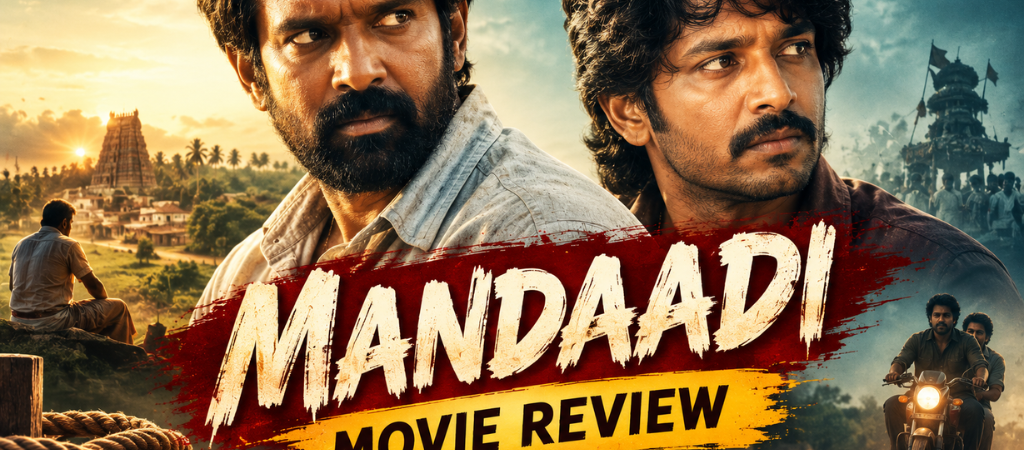
Mandaadi is a 2026 Tamil sports drama that brings traditional sailboat racing, village rivalries and personal conflicts together in one story. Starring Soori, Suhas and Mahima Nambiar, the film explores a sporting world that is rarely shown in mainstream Tamil cinema. Directed by Mathimaran Pugazhendhi, the movie combines action, emotional drama and competition against a coastal backdrop.
The most interesting part of Mandaadi is its central sporting concept. Instead of choosing a familiar game such as cricket or football, the film focuses on traditional boat racing and the people whose lives are connected to it. This setting gives the story a distinct identity and creates opportunities for exciting racing sequences.
However, an unusual subject alone cannot make a film successful. The storytelling, character development, emotional connection and pacing also matter. While the racing sequences and the coastal atmosphere are among the film’s key attractions, the narrative has also been criticised for uneven development and familiar dramatic elements.
So, is Mandaadi worth watching? The film may appeal to viewers who enjoy sports dramas, village-based stories and films about competition and rivalry. However, those expecting a consistently fresh story with fully developed characters may find some aspects less satisfying.
In this Mandaadi Movie Review, we explore the story, cast, performances, direction, technical aspects, strengths and weaknesses to help you decide whether the film belongs on your watchlist.
Mandaadi Movie Details
Before exploring the film in detail, here are the important facts.
| Movie Detail | Information |
| Movie Name | Mandaadi |
| Release Date | September 10, 2026 |
| Language | Tamil |
| Genre | Sports drama, action, drama |
| Lead Actor | Soori |
| Other Lead Cast | Suhas, Mahima Nambiar |
| Supporting Cast | Sathyaraj, Mithun Jai Sankar, Ravindra Vijay, Bala Saravanan |
| Director | Mathimaran Pugazhendhi |
| Music Composer | G. V. Prakash Kumar |
| Runtime | Approximately 2 hours 34 minutes |
| Main Setting | Coastal communities and traditional sailboat racing |
The film’s biggest point of difference is its focus on a traditional sport and the social environment surrounding it. This allows the story to explore more than the outcome of a competition. It also brings questions of pride, rivalry, community relationships and personal responsibility into the narrative.
Mandaadi Movie Story
The story of Mandaadi centres on Kaali, a former sailboat racer who returns to his village under unexpected circumstances. His return brings him back into a world shaped by traditional racing, old rivalries and relationships that have not been fully resolved.
Sailboat racing is more than a sporting activity in this setting. It is connected to identity, reputation and the pride of the people who participate in it. Winning a race can mean much more than earning a trophy, while losing can create tension between individuals and communities.
Kaali’s involvement in this environment brings the central conflict into focus. As the story develops, the world of racing becomes connected with personal struggles and competing interests. The characters must deal with the consequences of their decisions while facing the pressure created by their surroundings.
The film uses this sporting background to build its drama. Rather than presenting competition as a simple contest between two teams, it places the sport within a larger social and emotional setting.
A Story Built Around Competition and Rivalry
Competition is one of the main forces driving Mandaadi. In traditional sports, participants often compete not only for victory but also for recognition and respect. These motivations can make a race emotionally important for everyone involved.
The rivalry in the film provides opportunities for tension and dramatic confrontations. It also helps establish the stakes of the sporting sequences.
However, the effectiveness of such a story depends on how well the characters are developed. Viewers need to understand why the rivalry matters and what each person stands to lose. When the emotional background is strong, even a familiar competition can become engaging.
The Importance of the Coastal Setting
The coastal environment gives Mandaadi a distinctive atmosphere. The sea, boats and traditional racing practices help separate the film from more conventional sports dramas.
This setting also provides a natural connection between the characters and their community. Their relationship with the sport is linked to their everyday environment, making the racing world an important part of the story rather than simply a background for action.
The film’s concept is therefore one of its strongest features. Its success ultimately depends on how effectively the screenplay connects the sporting world with the characters’ personal journeys.
Soori’s Performance in Mandaadi
Soori plays Kaali, the central character whose return to the village brings him back into the world of sailboat racing.
Known for his work in Tamil cinema, Soori has taken on a range of roles beyond comedy, including emotionally demanding dramatic performances. Mandaadi places him in a story where physical action, personal conflict and emotional pressure are important.
Kaali’s character must operate within a competitive environment while dealing with relationships and rivalries. This gives the lead role several responsibilities: carrying the emotional story, making the sporting conflict believable and holding the audience’s attention during quieter scenes.
One of the key questions for the film is whether the character’s personal journey feels as compelling as the racing itself. Sports dramas are most effective when viewers become invested in the person behind the competition, not just the result of the final event.
Soori’s presence gives the film a recognisable lead, while the distinctive setting offers him a different kind of dramatic environment. The overall impact of his performance depends on how convincingly the character’s motivations and emotional changes are developed throughout the story.
Suhas as the Antagonist
Suhas plays an important role in the film’s central conflict. His character contributes to the rivalry that shapes the story and creates obstacles for the protagonist.
A strong antagonist is essential to a sports drama because competition becomes more interesting when the opposing side has clear motivations. The conflict should feel like more than a simple disagreement between a hero and a villain.
In Mandaadi, the rivalry helps build anticipation around the sporting events. It gives the characters personal reasons to compete and creates a sense that the results matter beyond the race itself.
However, a convincing antagonist also needs depth. When opposing characters have understandable motivations, their conflict becomes more engaging. When their behaviour follows familiar patterns without sufficient development, the story can become predictable.
The film’s central rivalry is an important part of its appeal, but the depth of the characters remains a significant factor in how satisfying the drama feels.
Mahima Nambiar and the Supporting Cast
Mahima Nambiar is among the film’s principal cast members, while Sathyaraj, Mithun Jai Sankar, Ravindra Vijay and Bala Saravanan contribute to the wider ensemble.
The supporting characters help establish the social world around Kaali and the competitive environment in which the story unfolds. In a village-based sports drama, these characters can provide emotional context, different perspectives and connections between the sporting conflict and everyday life.
A well-developed supporting cast can make the story feel larger than the main rivalry. Family relationships, friendships and community expectations can help viewers understand why the characters make certain choices.
At the same time, a film with several characters needs to give each important role enough space to feel meaningful. If the screenplay focuses too heavily on the main conflict, some supporting characters may not receive the development they deserve.
The effectiveness of the ensemble therefore depends on how well the film balances the central sporting story with the people who surround it.
What Works Well in Mandaadi?
There are several aspects of Mandaadi that may appeal to audiences who enjoy sports dramas.
1. A Fresh Sporting Concept
The biggest advantage is its focus on traditional sailboat racing. This is a less familiar subject in mainstream Tamil cinema than many popular sports, giving the film a distinctive starting point.
The sport also offers natural visual possibilities. Boats moving across the water, participants working together and the pressure of a close race can create exciting moments when filmed effectively.
2. An Interesting Coastal World
The setting gives the movie an identity of its own. Rather than placing the story in a generic sporting environment, the film connects its competition to a particular community and its traditions.
This can make the events feel more meaningful because the sport becomes part of the characters’ lives.
3. Potentially Engaging Racing Sequences
Sports films depend on the ability to make audiences feel the excitement of competition. Racing sequences need to communicate speed, effort, uncertainty and the possibility of defeat.
The sailboat-racing sequences are a central attraction of Mandaadi. They provide the film with opportunities for visual excitement and help distinguish it from ordinary relationship or village dramas.
4. A Mix of Action and Emotion
The film does not rely only on sporting events. Its personal conflicts and rivalries add emotional stakes to the competition.
This combination can appeal to viewers who enjoy action but also want a story about people, relationships and the consequences of their decisions.
5. A Recognisable Lead Cast
Soori’s leading role and the supporting cast give the film a strong foundation. The actors must bring credibility to the sporting world while making the personal conflicts feel believable.
When these elements work together, they can help a film connect with audiences beyond those who are specifically interested in the sport.
What Doesn’t Work as Well in Mandaadi?
Despite its distinctive concept, Mandaadi has aspects that may leave some viewers less satisfied.
1. Uneven Storytelling
One concern is that the narrative does not always maintain the same level of engagement. A sports drama needs to balance its preparation, personal conflicts and major competitions carefully.
If the story spends too much time establishing familiar dramatic situations, the momentum can slow. If important developments happen too quickly, the emotional impact may be reduced.
This balance is especially important in a film that runs for approximately two hours and thirty-four minutes.
2. Familiar Dramatic Elements
The film’s sporting setting is unusual, but some of its dramatic conflicts may feel familiar to viewers who have watched many rivalry-driven stories.
Competition, pride, revenge and personal disputes are common elements in sports and village dramas. They can still work well, but the screenplay needs to give them a distinctive emotional or narrative treatment.
The most successful moments are likely to be those in which the film connects these familiar themes directly to the characters and their sporting environment.
3. Character Development
A strong sports drama should make viewers care about the characters before asking them to invest in the final competition.
When motivations, relationships or personal struggles are not explored deeply enough, the sporting outcome may feel less emotionally powerful.
The film’s unusual setting creates an opportunity for memorable character development, but the screenplay must make full use of that opportunity.
4. Pacing and Narrative Focus
A lengthy sports drama needs to maintain a clear sense of progression. Every major scene should contribute to the characters, the rivalry or the sporting stakes.
When the narrative loses focus, viewers may find it harder to remain invested in the journey. A more consistent pace can make the action more exciting and the emotional moments more effective.
These concerns do not necessarily make the film unwatchable, but they can affect how strongly its distinctive concept translates into a satisfying overall experience.
Direction and Screenplay
Mathimaran Pugazhendhi directs Mandaadi, building the story around a sport that offers a different visual and cultural setting from more familiar commercial films.
The director’s central challenge is to balance the racing with the human drama. A film about competition must make the events exciting, but it also needs to explain why the characters care so deeply about winning.
The screenplay has to connect the sporting rules and traditions with the audience’s understanding of the conflict. Viewers who know little about sailboat racing should still be able to follow the stakes and understand why particular moments matter.
The coastal setting offers an opportunity to create a grounded atmosphere, while the rivalry provides a framework for building tension.
The film’s main limitation is that an original premise must be supported by equally engaging storytelling. When the character development and dramatic progression are not consistently strong, the novelty of the subject may not be enough to sustain the entire film.
Music, Cinematography and Technical Aspects
G. V. Prakash Kumar is the music composer for Mandaadi. Music can play an important role in a sports drama by building anticipation before a race, supporting emotional scenes and increasing the impact of major developments.
However, the soundtrack should work with the story rather than constantly trying to make every moment feel dramatic. Effective background music often makes the audience feel the pressure of a scene without distracting from the characters or the action.
Cinematography is equally important for a film centred on sailboat racing. The camera needs to capture the scale of the environment, the movement of the boats and the physical effort required from the participants.
The editing must also maintain clarity during competitive sequences. Viewers should be able to understand the progress of a race and recognise the moments that change its direction.
These technical elements help turn the sporting concept into a cinematic experience. Their ultimate success depends on how well they support the narrative rather than simply providing attractive visuals.
Mandaadi Movie: Strengths and Weaknesses at a Glance
| Strengths | Weaknesses |
| Unusual sailboat-racing concept | Some familiar dramatic developments |
| Distinctive coastal setting | Uneven narrative momentum |
| Potentially exciting sporting sequences | Character development may feel limited |
| Combination of competition and personal conflict | Length may affect pacing |
| Recognisable lead and supporting cast | The screenplay does not always fully exploit its original premise |
The film’s central strength is its subject matter. Its main challenge is turning that subject into a consistently compelling story.
Is Mandaadi Worth Watching?
Mandaadi may be worth considering if you enjoy Tamil sports dramas that combine competition, rivalry and emotional conflict.
The film’s focus on traditional sailboat racing gives it an unusual identity, while its coastal setting creates a different atmosphere from many familiar sports movies. Viewers interested in Soori’s dramatic roles may also find the film appealing.
However, expectations should be balanced. Those looking for a tightly structured screenplay with consistently developed characters may find some of the dramatic elements less effective than the central sporting concept.
Who Should Watch Mandaadi?
The film may appeal to:
- Fans of Soori and Tamil dramatic cinema.
- Viewers who enjoy sports-based films.
- Audiences interested in traditional sporting practices and coastal communities.
- People who like stories involving competition, rivalry and community pride.
- Viewers looking for a mix of action and emotional drama.
It may be less suitable for viewers who prefer fast-paced stories with minimal dramatic detours or highly unpredictable plots.
Mandaadi Movie Review: Final Verdict
Mandaadi stands out because it brings traditional sailboat racing into the centre of a Tamil sports drama. Its coastal setting, competitive atmosphere and focus on personal rivalries give it a recognisable identity.
The film’s biggest advantage is its unusual premise. The racing sequences provide opportunities for excitement, while the surrounding community gives the competition a wider emotional context. Soori leads a cast that includes Suhas and Mahima Nambiar, with the story bringing together sporting ambition and personal conflict.
However, the film’s distinctive subject is not always matched by equally consistent storytelling. Familiar dramatic elements, uneven pacing and limitations in character development can reduce the impact of its stronger ideas.
Overall, Mandaadi is an option for viewers interested in Tamil sports dramas and stories built around lesser-seen traditional competitions. Its concept is more distinctive than that of many familiar rivalry-driven films, even if the narrative does not always reach the same level of originality.
Final verdict: Consider it for its unusual sporting world, coastal atmosphere and mix of action and drama, while keeping expectations realistic about the screenplay and pacing.
Frequently Asked Questions (FAQs)
1. What is Mandaadi about?
Mandaadi is a Tamil sports drama centred on Kaali, a former sailboat racer who returns to his village and becomes involved again in traditional racing and old rivalries. The story connects sporting competition with personal conflict and community pride.
2. Who is the lead actor in Mandaadi?
Soori plays the lead role of Kaali. The film also features Suhas and Mahima Nambiar, along with supporting actors including Sathyaraj and Bala Saravanan.
3. Who directed Mandaadi?
Mandaadi was directed by Mathimaran Pugazhendhi. The film uses traditional sailboat racing as the foundation for its sporting and dramatic conflicts.
Also Check: Jumper Movie Review: Story, Cast, Rating and OTT Details
Conclusion
Mandaadi brings a less familiar sporting tradition to Tamil cinema and builds its drama around competition, rivalry and community identity. The film’s coastal setting and sailboat-racing concept make it an interesting option for viewers seeking something different from conventional sports stories.
Although its storytelling and pacing may not always match the originality of its premise, the film offers a combination of action, sporting drama and personal conflict.
If you enjoy Soori’s dramatic roles or films that explore traditional sports and community rivalries, Mandaadi may be worth adding to your watchlist.